
Watch The Angry Sound Tech’s tutorial above (9.5K views on YouTube).
This guide is for DJs and small production operators thinking about adding dj setup rental to an existing business. If you are stuck between buying more gear, building packages, and choosing a booking system, this will show you how to start with what you already own, price it sanely, and avoid the mistakes that kill margins.
A good dj setup rental business is usually not a standalone empire. It is a practical add-on. Done well, it turns idle gear into booked dates, keeps the website working while you sleep, and creates extra revenue for small events that would never hire you as a full DJ service.
If you also handle DJ library organization, build set preparation workflows, or refine your mobile DJ pricing strategy, the same principle applies here. Structure first. Revenue second.
DJ Setup Rental: What Actually Works
The transcript makes one point very clear. Simplicity sells. The top rental was not a giant custom production package. It was a do-it-yourself DJ package that solved a basic problem for backyard parties, small weddings, and casual events.
That matters because most rental customers are not experts. They do not want to compare eight mixers, four controller sizes, and six speaker models. They want one package that says, in plain terms, "this covers your event."
So the first mental model is this. Rental demand follows clarity, not inventory depth. A smaller catalog with clear packages often books better than a giant gear list with no guidance.
In practice, your first goal is not to become the biggest rental house in town. Your first goal is to make one or two offers easy to understand, easy to reserve, and easy to fulfill.
- Package the most common use case first.
- Keep the base offer complete enough to work.
- Use add-ons to handle edge cases and upsells.
- Avoid buying oddball gear before demand proves itself.
This is also where trust matters. The transcript is honest about context. What works in a small market may not scale the same way in a major city. A cheap backyard package can be a strong add-on in one market and a weak offer in another. The method still holds. The local economics change.
Package DJ Setup Rental Offers First
If you are starting from scratch, begin with prepackaged options. This is one of the strongest ideas in the transcript, and it matches how buyers behave. Consumers like fixed choices. They do not like building a system from parts unless they already know what they need.
A beginner-friendly dj setup rental package usually needs four things. Sound, playback, one voice input, and a simple setup path. The exact gear can vary, but the package logic should stay constant.
Worked example one. Say you own two compact powered speakers, two stands, a basic DJ controller, and one wired mic. Your base package can be framed as: two speakers, stands, controller, one microphone, all needed cables, customer supplies music source. That is easy to price and easy to explain.
Worked example two. Say you do not want to rent out your main controller. Build a speaker-only party package instead. Two speakers, stands, aux connection, one wired mic, and simple lighting. That still serves the same small-event demand without risking your core performance rig.
The failure mode here is over-customization. You post twenty separate items and assume customers will assemble the right system. What happens next is predictable. They either book the wrong gear, call with basic questions, or abandon the booking.
Validation Check
The transcript also shows why add-ons matter. The base offer gets attention. The add-ons recover margin. A wireless mic for speeches, a subwoofer for bigger groups, or extra lighting for a wedding can move a cheap package into a worthwhile booking.
This is a better model than stuffing everything into the base package. A bloated package looks expensive. A clean base package with relevant add-ons feels flexible.
Use add-ons only when the customer can understand the benefit immediately.
- Wireless mic for speeches or announcements
- Subwoofer for larger outdoor groups or dance-heavy events
- Extra lighting for weddings and night events
- Delivery, setup, and teardown as a labor charge
One caution. Package simplicity is not the same as underspecifying the event. If a customer expects sound for 150 guests and books the cheapest setup, you still need a way to steer them toward the right package or add-ons.
That can be handled with plain product copy, quick event-size notes, and a short pre-booking checklist. You do not need a complicated quoting process for every small event.
If you manage lots of local files for gigs, prep, and category-based sorting, the same habit helps here. Some DJs use spreadsheets to track package variants. Others use structured tools. Vibes, for example, lets DJs organize local music into custom categories, track sorting progress, and prepare named sets before export. That does not run rentals, but it solves the related problem of keeping your performance library structured while the business side expands.
Booking Systems for DJ Setup Rental
The transcript spends a lot of time on websites for a reason. The website is not just marketing. It is the operating system for your rental workflow.
There are three broad stages shown in the speaker's evolution. First, a basic page that says "call us." Second, a generic cart. Third, a booking system with inventory and date logic.
That progression is useful because it shows what breaks at each stage. A contact page creates friction. A generic cart shows products but lacks rental controls. A proper booking system finally handles availability and reservations.
As of April 2026, Checkfront positions itself as a cloud-based booking platform with one main plan priced at $99 per month plus a 3% online booking fee, and it specifically describes support for rentals among other booking use cases. pricing
WooCommerce remains a self-hosted option for WordPress sites, and the official WooCommerce release pages show the platform is still actively updated, with version 10.6.2 listed as stable on March 31, 2026. The official WooCommerce Bookings extension also remains available as a separate product. releases
So which route makes sense? Use this rule. Hosted tools reduce setup friction. Self-hosted tools increase page-level SEO control. That tradeoff sits at the center of the transcript.
| System Type | Best For | Strength | Weakness |
|---|---|---|---|
| Call-only page | Very early testing | Fast to launch | High customer friction |
| Generic cart | Showing basic inventory | Simple product browsing | Weak rental date control |
| Hosted booking platform | Fast operational setup | Calendar and inventory logic | Weaker on-site SEO depth |
| Self-hosted WooCommerce + bookings | WordPress users building SEO pages | Each product gets its own page | More setup and plugin management |
Choose the booking stack based on workflow stage, not hype.
Worked example one. You already run a WordPress site and care about ranking for local package terms like dj setup rental, dj set rental, and rent dj controller. A self-hosted product structure makes sense because each rental item or package can live as its own indexed page.
Worked example two. You have no interest in managing WordPress plugins, updates, invoices, and extension sprawl. A hosted booking platform may be the better fit even if its SEO upside is lower, because it gets you online faster and reduces admin complexity.
The failure mode is picking software based only on feature count. If the system does not match your workflow, you will either stop updating it or create so much booking friction that customers give up.
Validation Check
Why does this matter for SEO? Because the transcript reports a major booking jump after moving from hosted drop-ins to on-site product pages. That is not a universal law, but the mechanism is sound. More relevant indexed pages create more opportunities to rank for long-tail rental terms.
There is a catch. If your main website already ranks strongly for another service, adding a large rental catalog can dilute topical focus. In other words, do not let your wedding DJ site become mostly rental pages unless that shift is intentional.
That is why some operators split sites. One site sells the service. Another site rents the gear. The right answer depends on whether rentals support the existing brand or compete with its keyword focus.
Price DJ Setup Rental for Margin
Pricing is where many rental ideas fall apart. The transcript gives a practical starting rule: charge around 5% of MAP or replacement cost per rental day, then adjust for wear, missing parts, and local demand.
That is useful because it gives you a baseline without pretending every item behaves the same way. A simple speaker may rent smoothly for years. A lighting kit with bolts, remotes, and loose accessories may come back incomplete every third booking.
So the second mental model is this. Price by replacement cost first, then by operational pain. If an item creates extra admin, damage risk, or missing-part risk, the rental rate must absorb that.
Worked example one. A speaker costs $1,000 new. At 5%, the day rate starts at $50. If that speaker is durable, self-contained, and rarely comes back damaged, 5% may be enough.
Worked example two. A compact lighting bar costs far less, but remotes disappear often. The transcript suggests raising price slightly to absorb replacement losses instead of fighting every customer over a missing accessory.
Worked example three. A truss or stand system with many bolts and pieces may need a much higher percentage. Not because the core item is expensive, but because each rental creates part-loss risk and repacking time.
This means flat pricing rules are only a starting point.
- Use 5% as a baseline for straightforward items.
- Raise pricing for gear with repeated missing-part issues.
- Keep entry-level options cheap enough to attract casual events.
- Use labor charges for delivery, setup, and teardown.
The transcript also makes an important market point. A mathematically clean price is not always a marketable price. If two speakers cost the customer almost as much as hiring a budget DJ, the rental may lose its appeal.
That is why having lower-cost inventory can outperform premium gear in the rental channel. Cheap, reliable, easy-to-understand products often book more often than high-end items with a cleaner spec sheet.
The failure mode is buying expensive gear because it looks more rentable on paper, then discovering your market mostly wants affordable backyard solutions.
You will know pricing is healthy when three things happen at once: the item keeps booking, small losses are already covered by the rate, and you do not feel resentment every time the gear comes back.
Need a fast pricing filter? Use a decision checklist.
| Scenario | Best Choice | Why | Next Action |
|---|---|---|---|
| Simple speaker or controller with low loss risk | Start near 5% | Easy to manage and replace | Track first 10 rentals before changing price |
| Item has many loose parts | Price above baseline | Missing pieces create hidden costs | Add a packing checklist and accessory fee buffer |
| Casual backyard market is price-sensitive | Keep a budget package | Lower friction increases booking volume | Offer upgrades as add-ons, not base inclusions |
| Customer needs delivery and setup | Charge labor separately | Service time is not gear depreciation | Add a clear setup line item at checkout |
Use this pricing framework before you add or raise a rental rate.
Inventory Rules That Protect Cash Flow
The transcript is especially strong on inventory discipline. Start with what you already own. Do not buy random gear just because one person asked for it. That advice sounds obvious, but it is where many small rental efforts bleed money.
The reason is simple. Rental inventory is not just stock. It is stock plus storage, maintenance, accessories, testing time, and depreciation. If an item rents once and then sits for four years, the spreadsheet story was wrong.
The transcript gives a perfect failure example. A specialized lighting controller was purchased for a single rental, used once, then sat unused for years before being sold at a steep loss. That is not expansion. That is tuition.
So the third mental model is this. Expand inventory only where demand repeats and overlap exists. Repeated demand means more than one customer. Overlap means the gear can also support your own gigs or adjacent packages.
Worked example one. A customer asks for 15-inch speakers. If that request appears repeatedly and the speakers are useful for your own events, adding one pair may make sense.
Worked example two. A customer asks for a niche controller or unusual effect that does not fit your normal business. Unless you already see a local market for it, pass or subrent instead of buying.
A useful test is the three-use rule. Can this item serve your own gigs, your main package line, and future upsell demand? If not, the purchase needs stronger evidence.
Another useful filter is setup burden. Some items are rentable in theory but painful in reality. Too many cables, too many missing parts, or too much customer confusion can make a low-ticket item not worth the calendar space.
You will know your inventory is healthy when your catalog feels boring in the best possible way. The same reliable packages move often. Repairs stay predictable. Packing gets faster over time.
This is also where organization outside the rental site matters. As your paid gigs, practice sets, and rental jobs all compete for attention, structured prep prevents double-thinking. Vibes was built from that same practitioner problem. After years of scattered library friction and professional UX work, its structure-first approach helps DJs sort local tracks, build categories, and prep named sets without turning performance prep into guesswork. That does not replace rental software. It reduces chaos around the music side of the same business.
One honest limitation from the transcript deserves emphasis. The market may cap your ceiling. In smaller cities, rentals are often a supplement to DJ work, production, service, or sales. That is not a flaw in your execution. It is a demand constraint.
That is why cash discipline matters more than catalog bragging rights.
How Do You Rent DJ Setup Gear Online?
You rent DJ setup gear online by turning each package or item into a clear product page, attaching date-based availability, collecting payment, and confirming pickup or delivery rules before the event. The easier the booking path, the fewer calls you need to handle manually.
The transcript strongly favors automation. That is not just a convenience feature. For a solo operator, online booking is capacity management. If bookings only happen by phone, your business stalls every time you are driving, setting up, or already on a gig.
A workable online flow usually has six parts.
- Show the package or item with plain-language use cases.
- Display availability by date.
- Offer relevant add-ons on the same page.
- Collect payment or deposit.
- Capture rental terms and customer details.
- Send confirmation with pickup or delivery instructions.
The failure mode is partial automation. Customers can browse, but they still need to call for pricing, date checks, or final approval. That creates the appearance of convenience without the actual time savings.
You will know your online flow works when new bookings arrive overnight or while you are on another job, and the only messages you receive are edge-case questions rather than basic availability checks.
Rental Agreements, Damage, and Logistics
The transcript is candid here too. Some protective steps were handled loosely in a small market, but the speaker still says you really should collect stronger customer information and use a rental agreement. Treat that as the correct lesson.
At minimum, your process should cover identity, damage responsibility, timing, and return condition. The exact legal form depends on your location, so use local legal guidance for the contract itself. But operationally, the checklist is straightforward.
- Verify customer identity before release.
- Use a signed rental agreement.
- State who pays for damage, missing parts, and overtime.
- Document pickup and return windows clearly.
- Inspect gear before and after each rental.
One subtle but smart point in the transcript is flexibility around pickup and return windows. A one-day rental can still allow pickup the day before and return the day after if your schedule supports it. Customers feel looked after, but your rate structure stays simple.
That works only if availability is still protected. If one flexible booking blocks two other potential jobs, your policy needs tightening.
This is where operational discipline beats generosity. Flexibility should feel like service, not become an unpriced liability.
| Mistake | Why It Happens | How to Avoid |
|---|---|---|
| Buying niche gear for one request | Owner assumes one inquiry equals ongoing demand | Require repeat demand or overlap with your own gigs before buying |
| Posting a catalog with no packages | Owner thinks more options feel professional | Lead with 1 to 3 packages, then offer add-ons |
| Using call-only booking flow | It feels easier than setting up automation | Add availability, payment, and confirmation online |
| Charging one flat percentage for everything | Simple pricing seems efficient | Adjust rates for missing parts, wear, and setup burden |
| Mixing rental pages into a high-ranking service site blindly | Owner wants one site for everything | Check whether rental pages dilute your main service keywords |
Most rental problems start as workflow shortcuts.
When DJ Setup Rental Fits Your Business
A dj setup rental side business fits best when you already own usable gear, already serve local events, and already attract the kind of customer who needs simple event sound without full-service DJ performance.
It fits less well when your only plan is to buy gear and hope rentals justify it. It also fits less well when your main site ranks for a narrow premium service and rentals would muddy the brand.
This is the central strategic takeaway. Treat rentals as an efficiency play, not just a revenue fantasy. Idle gear can produce income. Automated booking can reduce phone time. Clear packages can convert small-event demand. Those are real benefits. But the business gets shaky when you force it to carry costs it was never built to support.
If you are still learning DJing itself, the self-taught path described in the source matters here too. Many DJs start informally, with borrowed spaces, basic gear, and intuition before systems. That spirit is useful. Start practical. Test what books. Keep only what earns its shelf space.
If you want to go deeper on local music file workflows, Rekordbox playlist structure, or DJ set planning, build those systems before busy season. They compound.
Conclusion
The best dj setup rental businesses are built on restraint. Start with gear you already own. Turn it into clear packages. Price for real wear, not spreadsheet fantasy. Let the website handle the repeatable parts.
Three takeaways matter most.
- Clarity beats catalog size. Packages book better than giant gear lists.
- Automation beats phone dependency. Online booking expands your actual capacity.
- Discipline beats expansion. Buy gear only when repeat demand proves it.
If you treat rentals as a structured extension of your DJ workflow, not a separate fantasy business, you give yourself the best chance of building something useful, durable, and worth the effort.
The visual way to organize your DJ library
Tag tracks by vibe. See everything at once. Export to rekordbox, Serato, Traktor or Engine DJ.
14-day free trial. Full access, no strings attached.
or see how it works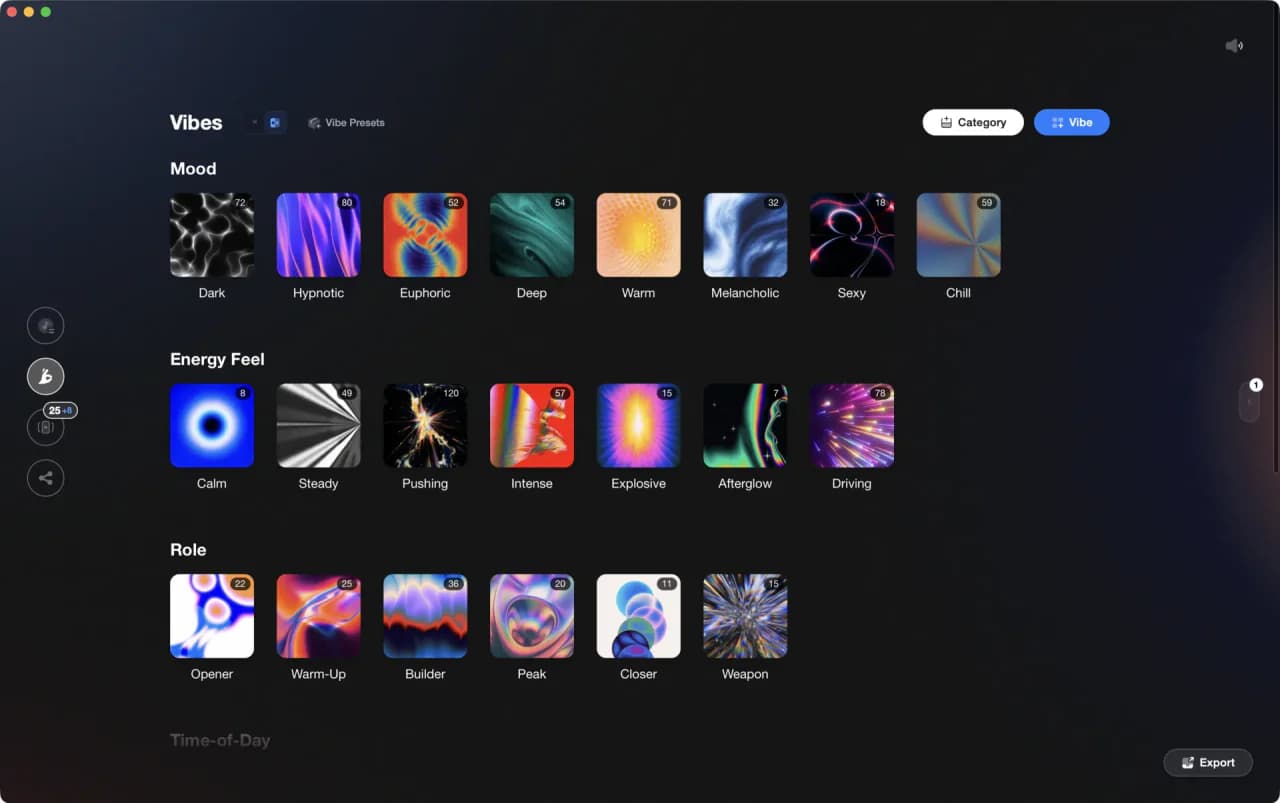
Equipment & Software
Frequently Asked Questions

Hey, it's Ben Modigell 👋
I DJ and produce as so I so: downtempo, minimal, dub house, tech house, and techno (releases on Spotify and SoundCloud, links above). Everything I write here comes from my own gigs, studio sessions, and library cleanups: the rules I follow, the failure modes I have actually hit, and the workflow I use when nobody is watching. If a technique did not earn its place in my own sets, it does not make it into a tutorial.