
Zoom R4 MultiTrak
·ZoomA compact four-track digital recorder and 2-in/2-out USB audio interface built for songwriting, demos, and portable music production.
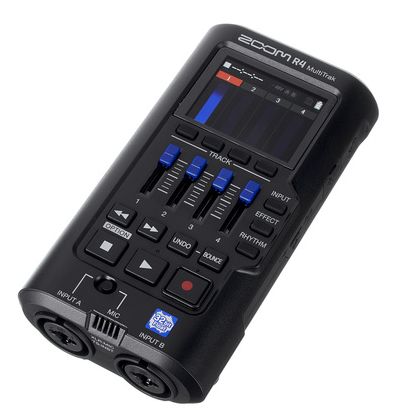
The Zoom R4 MultiTrak is a small 4-track recorder for songwriters who want hardware speed without a full desktop setup. It combines a compact multitrack workflow, 32-bit float capture, and USB audio in one battery-powered box. If you want to get ideas down fast, layer parts, and move on, the Zoom R4 MultiTrak makes a strong case.
Product Overview
The Zoom R4 MultiTrak is best for musicians who value speed, portability, and tactile control over deep editing. It is not a full studio replacement, but it is a smart songwriting tool with enough mix control to turn ideas into usable demos.
The gear name "four-track" is too generic on its own, so the closest current match with strong market relevance is the Zoom R4 MultiTrak. It is a real modern four-track recorder with an official product page, current retail listings, and an active firmware history.
Zoom positions it as a musician-first recorder rather than a field recorder. That shows in the layout. You get four faders, direct transport buttons, a bounce track, input effects, rhythm patterns, and a built-in mic. The workflow feels closer to a pocket Portastudio than to a handheld interview recorder.
This is also where the Zoom R4 MultiTrak separates itself from many app-based setups. You can power it with AA batteries or USB-C, plug in a mic or instrument, hit record, and keep moving. For readers comparing compact recorders, that practical speed matters more than long feature lists.
If you need more channels at once, look at the Zoom H4essential or a larger Zoom R12 MultiTrak. If your goal is old-school demo building with less menu friction, the R4 lands in a useful middle ground.
Zoom R4 MultiTrak Features
The main selling point is simple: the Zoom R4 MultiTrak lets you record, layer, and bounce ideas quickly. Its feature set is narrow in the right way, with most functions aimed at getting songs built instead of making you manage a complex device.
First, there is 32-bit float recording. In practice, this means you spend less time worrying about input gain and less time ruining takes with clipping. For fast demo work, that is a real advantage.
Second, the dedicated bounce track is more important than it sounds. You only record two sources at once, but you can keep stacking parts by bouncing finished layers and freeing tracks again. That is the classic four-track mindset, updated for solid-state recording.
Third, the hardware layout works in its favor. Four small faders, transport buttons, and a clear color screen make the unit much easier to use than menu-heavy pocket recorders. MusicRadar also highlighted the compact size and well-implemented screen as strengths.
The onboard toolset is also broader than the size suggests. Each track gets 3-band EQ, pan, echo, and reverb. Input A can use insert-style effects such as amp simulations, delays, distortions, and preamp voicings. There are also more than 80 rhythm patterns for quick writing sessions.
Under real club conditions, workflow speed and low-light clarity tend to matter more than headline features. The R4's low-light-friendly screen, physical controls, and battery or USB power options make more sense in real use than flashy specs that slow you down.
- 32-bit float recording at 48 kHz
- Two XLR/TS combo inputs plus built-in mic
- Four track faders with bounce-track workflow
- 2-in/2-out USB-C audio interface mode
- Per-track EQ, pan, reverb, and echo
- 80+ drum patterns for writing and practice
Technical Specs
The Zoom R4 MultiTrak is technically straightforward. Its official specs confirm a compact chassis, two analog inputs, four-track playback, USB-C connectivity, and battery-powered operation. The main limit is simultaneous input count, not storage or portability.
| Specification | Details |
|---|---|
| Dimensions | 74 x 138 x 36 mm |
| Weight | 287 g including batteries |
| Analog inputs | 2 x XLR/TS combo |
| Built-in mic | Omnidirectional condenser |
| Headphone output | 3.5 mm stereo mini jack |
| Recording format | WAV, 48 kHz, 32-bit float |
| Simultaneous recording | 2 tracks |
| Playback tracks | 4 tracks |
| USB | USB-C, 2-in/2-out audio interface |
| Storage | microSDHC 4 GB to 32 GB, microSDXC 64 GB to 1 TB |
| Phantom power | +48V, switchable per input |
| Power | 4 AA batteries, USB bus power, or AD-17 adapter |
One detail worth noting is the format split between recorder and interface use. As a recorder, the unit works around 32-bit float WAV capture at 48 kHz. As an interface, it functions as a 2-in/2-out USB device. That is useful for sketches and overdubs, but not the same as a full multichannel interface.
Who Is This For
The Zoom R4 MultiTrak is for musicians who want to build songs quickly without opening a DAW first. It suits intermediate users best because the workflow is simple, but the inputs, effects, and bounce logic still reward people who understand basic recording.
It makes the most sense for solo writers, guitar-and-vocal creators, synth users, and producers who need a portable idea machine. If your workflow starts with capturing fragments, layering overdubs, and exporting later, this unit fits naturally.
It is less ideal for bands tracking live, podcasters needing multiple mics, or engineers who want detailed routing. Two simultaneous inputs is the hard ceiling. If that sounds restrictive, it probably is.
Beginners can still use it, but they may get more value from a broader buying path like a portable recorder guide or a simpler audio interface comparison. The R4 works best when you already know you want hardware songwriting flow.
In Practice
In daily use, the Zoom R4 MultiTrak feels more like a songwriting notebook than a production hub. That is a compliment. The point is speed, not endless option depth.
You can plug a vocal mic into one combo input, a guitar into the other, and build the core of a song without touching a laptop. The built-in mic is there for quick references, acoustic ideas, or capturing something before it disappears.
The faders matter. Even small faders beat touchscreen-only mixing when you need instant balance changes. This is especially helpful when working in dim rehearsal rooms, backstage areas, or improvised setups where menu diving kills momentum.
The limits are clear, though. You cannot treat it like a modern band-tracking station. Two inputs at once means the workflow favors overdubbing. The result is excellent for demos, songwriting, electronic sketches, and stripped-down arrangements, but not for complex sessions.
That is why the value question depends on how you work. If you want a focused recorder that stays out of the way, the design makes sense. If you expect deep editing, lots of I/O, or polished final production inside the box, you will hit the edges quickly.
Pros and Cons
The Zoom R4 MultiTrak gets the basics right for portable music creation. Its strongest points are workflow, portability, and stress-free capture. Its main weaknesses are input count and overall production depth.
Pros
- Portable and genuinely musician-focused.
- Fast hardware workflow.
- 32-bit float recording reduces setup friction.
- Bounce track extends layering.
- Useful built-in effects and rhythm tools.
- Can double as a USB interface.
Cons
- -Only two inputs can record at once.
- -Better for sketching than full arrangements.
- -No onboard speaker.
- -Small format means smaller controls.
- -Some users will outgrow it if they need more routing or editing.
Price and Value
The Zoom R4 MultiTrak sits in the mid-range bracket. Current verified pricing shows about $165 at Thomann in the US view, around €190 in Europe, and about £158 in the UK through tracked review pricing. At launch, coverage around the announcement placed it closer to $199 and €219.
That price drop improves the value story. At current street pricing, the R4 makes more sense as a dedicated writing tool than it did at launch. You are paying for tactile workflow and portability, not maximum track count.
Used prices are active on Reverb price tracking, so the second-hand market is worth checking if you want the cheapest entry point. Just confirm button response, input noise, battery compartment condition, and SD card behavior before buying.
If you need more channels, the Zoom R12 MultiTrak is the logical step up. If you need more field-recorder flexibility, the Zoom H4essential is a better fit. If you want small, fast, and musical, the R4 still earns its place.
Alternatives
The most useful alternatives depend on whether you care more about simultaneous inputs, classic Portastudio flow, or portable field recording. The Zoom R4 MultiTrak wins on compact songwriting workflow, but it is not the only smart option near this price.
| Product | Price | Key Difference |
|---|---|---|
| Zoom H4essential | $220 | Four-channel recording with stronger field-recorder positioning |
| Zoom R12 MultiTrak | $259 | Larger multitrack platform with more production headroom |
| Tascam DP-006 | $175 | Traditional standalone multitracker without 32-bit float |
Bottom Line
The Zoom R4 MultiTrak is a niche tool in a good way. It does not try to be a full studio, a full field recorder, and a full mixer at the same time. Instead, it gives musicians a compact place to capture, layer, and move ideas forward.
That focus is its strength. You get real controls, useful effects, battery power, USB audio, and a bounce workflow that encourages finishing ideas instead of collecting half-started sessions.
Buy it if you want a modern four-track built around musical momentum. Skip it if you need more than two live inputs or deeper production tools from the start.
The visual way to organize your DJ library
Tag tracks by vibe. See everything at once. Export to rekordbox, Serato, Traktor or Engine DJ.
14-day free trial. Full access, no strings attached.
or see how it works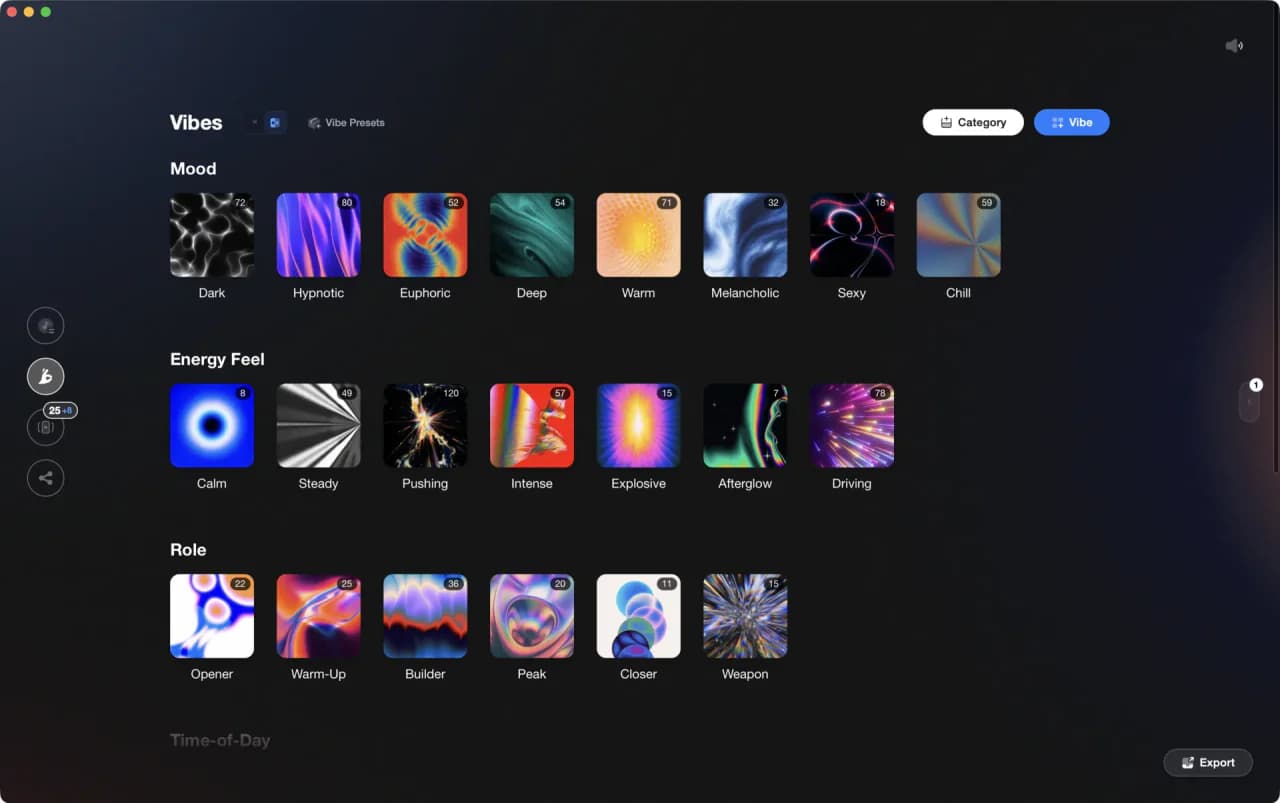
Frequently Asked Questions

Hey, it's Ben Modigell 👋
I DJ and produce as so I so: downtempo, minimal, dub house, tech house, and techno (releases on Spotify and SoundCloud, links above). Everything I write here comes from my own gigs, studio sessions, and library cleanups: the rules I follow, the failure modes I have actually hit, and the workflow I use when nobody is watching. If a technique did not earn its place in my own sets, it does not make it into a tutorial.