
dBpoweramp
·IllustrateAudio conversion and CD ripping software for Windows and macOS with secure ripping, batch processing, and broad codec support.

dBpoweramp is best for people who care about clean rips, reliable tags, and efficient library management. If you are archiving CDs, converting large folders, or standardizing a music collection for a server, streamer, or phone, dBpoweramp stays relevant because it solves practical problems faster than many free tools.
dBpoweramp Overview
dBpoweramp is an audio conversion and CD ripping suite for Windows and macOS. The core appeal is simple: secure ripping, broad format support, and metadata tools that reduce cleanup work after the rip.
On the official site, Illustrate positions dBpoweramp as two main tools in one: Audio Converter and CD Ripper. The software also includes batch conversion, tag editing, album art support, and DSP processing, which makes it more useful than a basic file converter.
That matters if your goal is not just to rip discs, but to build a library that stays organized over time. dBpoweramp can preserve tags and artwork, convert whole folder trees, and work with common formats including FLAC, MP3, AAC, Apple Lossless, WAV, WavPack, Opus, Ogg Vorbis, and DSD.
For buyers, the main question is not whether dBpoweramp works. It clearly does. The real question is whether its workflow saves you enough time to justify paying for it instead of using Exact Audio Copy, XLD, or a more general tool like foobar2000.
As of Tuesday, April 21, 2026, the product is still current, and the public forum shows a release thread for R2026-01-31. That suggests active maintenance, which matters for codec support, OS compatibility, and metadata services.
Key Features
The strongest feature set centers on verified ripping and efficient conversion. dBpoweramp is designed to help you get a correct rip the first time, then handle tagging and format changes without leaving the app.
- Secure ripping with AccurateRip verification
- Batch Converter for whole-folder processing
- Integrated ID tag editing in Explorer and Finder
- Album art lookup and metadata aggregation
- DSP effects such as ReplayGain, HDCD, and sample-rate conversion
- Multi-CPU encoding for faster large-scale conversion
The CD Ripper setup guide explains the secure-ripping logic clearly. It uses AccurateRip checks, optional C2 error pointers, and re-reading to detect or recover errors. In practice, that makes dBpoweramp more attractive for collectors with scratched or inconsistent discs.
The metadata side is also a real strength. The guide says CD Ripper uses five online metadata providers with PerfectMeta active, and the main product pages highlight high-resolution album art support. This is not glamorous, but it saves hours when you are ripping hundreds of discs.
Batch conversion is where dBpoweramp often pulls ahead of simpler apps. You can select a whole music tree, filter file types, sort by tag data, and apply conversion rules at scale. If you are moving from FLAC to AAC for portable use, or cleaning a mixed archive, this is the reason to buy it.
The result is a tool that feels built for library maintenance, not just one-off file export. If that is your use case, dBpoweramp makes more sense than a lightweight converter or media player.
Technical Specs
dBpoweramp is software, so the meaningful specs are platform support, codec support, and workflow features. The public documentation is stronger on capabilities than on classic hardware-style specifications.
| Specification | Details |
|---|---|
| Developer | Illustrate |
| Platform | Windows and macOS |
| Main modules | Audio Converter, CD Ripper, Batch Converter, ID Tag editor |
| Supported output formats | FLAC, MP3, M4A/AAC, Apple Lossless, WAV, WavPack, Opus, Ogg Vorbis, DSD |
| Ripping verification | AccurateRip, secure ripping, C2 error support, re-reading |
| Metadata tools | PerfectMeta with 5 metadata providers, album art search |
| Processing tools | ReplayGain, EBU R128 options, HDCD, sample-rate conversion |
| File management | Batch folder conversion, advanced naming, tag editing |
One limitation is pricing transparency in search-visible page text. The purchase page clearly offers dBpoweramp Reference and suite bundles, but the exact public prices were not exposed in the text returned by searchable sources during research. Because of that, the structured price fields above are set to null rather than guessed.
If you need hardware-specific setup advice, the CD ripping side still depends on your optical drive. Features like C2 support, cache behavior, and lead-in or lead-out reading vary by drive, so dBpoweramp's ceiling is partly determined by the transport you pair with it.
Who Is This For
dBpoweramp suits anyone who values verified results over free-tool tinkering. It works especially well for collectors, streamers, and home listeners building a tagged lossless library for long-term use.
Beginners can use it because the workflow is clearer than many enthusiast tools. You insert a disc, configure format and naming, and the app handles much of the heavy lifting. That makes it friendlier than Exact Audio Copy for many first-time users.
Intermediate and advanced users benefit more. If you have mixed codecs, multiple storage targets, ReplayGain needs, or a network library built around Asset UPnP servers or similar systems, dBpoweramp becomes a maintenance tool, not just a ripper.
It is less compelling if you only rip a handful of discs each year. In that case, a free option like Exact Audio Copy on Windows or XLD on macOS may be enough, even if the workflow is slower.
In Practice
In day-to-day use, dBpoweramp feels built around reducing repeat work. The software handles conversion, naming, metadata, and DSP in one chain, which means fewer handoffs between apps.
That is the real advantage. A lot of free tools can rip accurately or convert cleanly. Fewer do both while also giving you strong tag editing, art handling, and folder-level control from the same workflow.
For CD ripping, the official setup guide is unusually practical. It explains secure mode, cache handling, drive offsets, C2 detection, and ReplayGain in plain language. That gives dBpoweramp a shorter learning curve than some older audiophile favorites.
For conversion work, the biggest win is scale. If you are normalizing a portable library, generating MP3 copies from a FLAC archive, or cleaning inconsistent tags before using a streamer, batch tools make the process fast and predictable.
The interface is functional, not stylish. That will not bother most collectors, but it does feel more like a utility than a polished modern media app. Still, the layout serves the task well, and experienced practitioners typically prefer that tradeoff.
One caution is that dBpoweramp does not replace judgment. Metadata can still need manual correction. Drive behavior still matters. And lossy conversion settings still require care. The software gives you strong tools, but it does not remove the need for a sensible archive plan.
Pros and Cons
dBpoweramp earns its reputation through workflow efficiency and trusted ripping features. Its weaknesses are mostly about cost visibility, interface age, and the fact that free alternatives still exist.
Pros
- Secure ripping with AccurateRip is the headline feature.
- Batch conversion is excellent.
- Tagging and album art tools reduce cleanup time.
- Format support is broad.
- The setup documentation is practical and unusually clear.
Cons
- -Public pricing was not clearly exposed in searchable text during research.
- -The interface looks utilitarian.
- -Some advanced ripping outcomes still depend on your optical drive.
- -If you rarely rip or convert, free alternatives may be enough.
Price and Value
The value question comes down to time saved. dBpoweramp is worth paying for if you rip often, convert in bulk, or care enough about metadata to avoid fixing every album by hand.
The official purchase page confirms paid Reference and suite options, plus update renewals, but searchable source text did not expose exact USD, EUR, or GBP prices during this research pass. Because pricing could not be verified cleanly from source text on April 21, 2026, the article uses null price fields instead of guessing.
Even with that limitation, the market position is clear. dBpoweramp sits above free tools in convenience, tagging, and batch handling. If your library is large, that premium is easy to justify. If your needs are small, the free route is harder to argue against.
Used-market logic does not apply here in the normal hardware sense, but update policy does. Buyers should check whether they need ongoing updates for OS support and future codec changes, especially on a primary archive machine.
Alternatives
The most common alternatives trade ease of use for cost savings. dBpoweramp usually wins on workflow, while Exact Audio Copy and XLD win on entry price.
| Product | Price | Key Difference |
|---|---|---|
| Exact Audio Copy | $0 | Deep manual Windows ripping tool with slower setup |
| XLD | $0 | Mac-focused secure ripper and converter with a lighter feature set |
| foobar2000 | $0 | Excellent utility ecosystem, but less centered on guided secure ripping |
If you want a more specialized server workflow after ripping, pair dBpoweramp with tools in the music server software category. If you want the cheapest accurate-ripping path, start with Exact Audio Copy or XLD and accept the extra setup time.
Bottom Line
dBpoweramp remains one of the safest recommendations for music collectors who want reliable CD ripping and efficient file conversion. Its advantage is not a flashy feature. It is the way secure ripping, metadata, tagging, album art, and batch processing work together.
If you are archiving a serious CD library, dBpoweramp is easy to recommend. If you convert large folders often, it is also easy to recommend. If you only need occasional ripping, free tools stay competitive.
In other words, dBpoweramp is not the only accurate option. It is one of the most efficient ones. For many library builders, that is the difference that matters.
The visual way to organize your DJ library
Tag tracks by vibe. See everything at once. Export to rekordbox, Serato, Traktor or Engine DJ.
14-day free trial. Full access, no strings attached.
or see how it works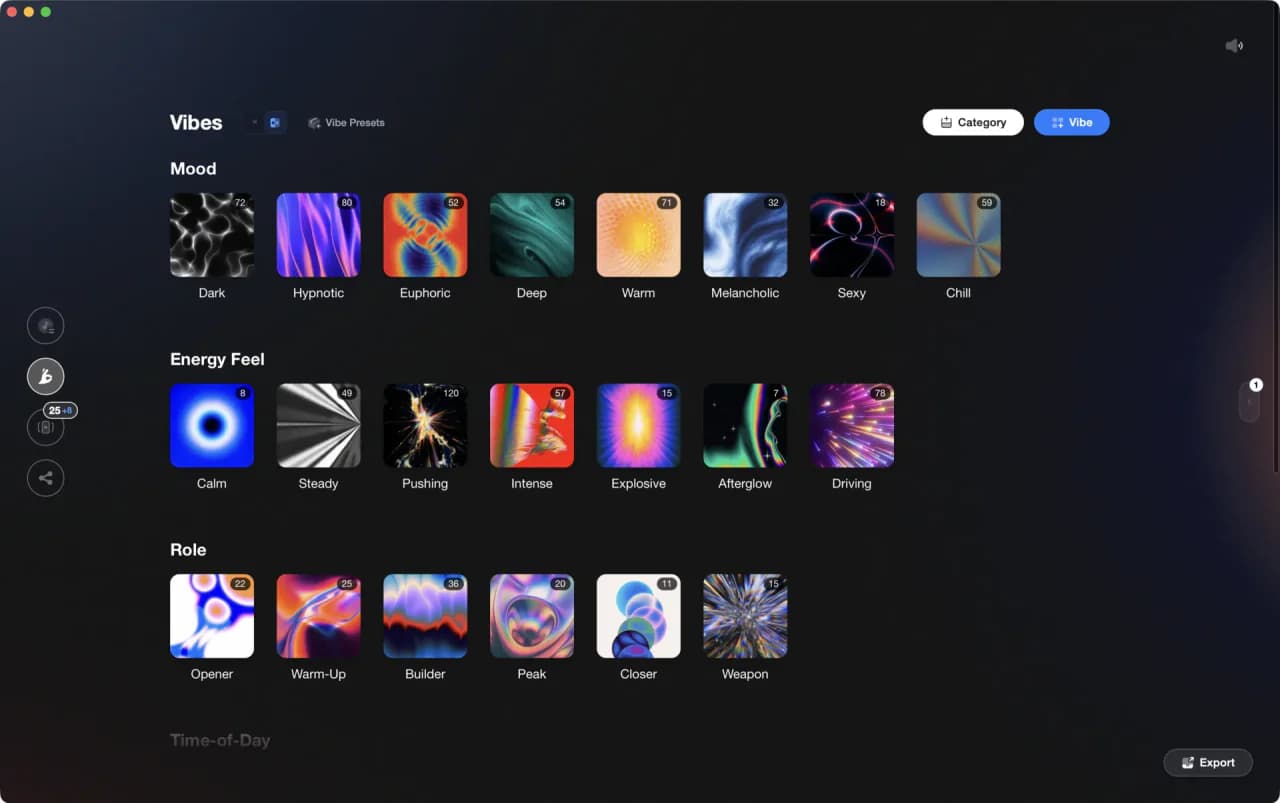
Frequently Asked Questions

Hey, it's Ben Modigell 👋
I DJ and produce as so I so: downtempo, minimal, dub house, tech house, and techno (releases on Spotify and SoundCloud, links above). Everything I write here comes from my own gigs, studio sessions, and library cleanups: the rules I follow, the failure modes I have actually hit, and the workflow I use when nobody is watching. If a technique did not earn its place in my own sets, it does not make it into a tutorial.